

Titaura is a popular Nepali snack, also known as Titora, typically made with dried fruits like lapsi (Nepali hog plum) and tamarind, and flavored with a blend of salt, sugar, chili, and other spices. It’s a beloved treat, especially in the Himalayan region, known for its sweet, sour, salty, and spicy flavors. Titaura can be found in various forms, including wet, dry, and chunky pieces, with “tukra piro” meaning “pieces and spicy”.
Here’s a more detailed look at Titaura:
Ingredients:
- Lapsi (Nepali Hog Plum): The main fruit used, known for its tangy and sour taste.
- Dried Fruits: Other fruits like tamarind or amla (Indian gooseberry) can also be used.
- Spices: A blend of salt, sugar, chili powder, black salt (Kala Namak), citric acid, ginger powder, Timmur (Sichuan pepper).
- Other: Some varieties may include jaggery or other sweeteners.
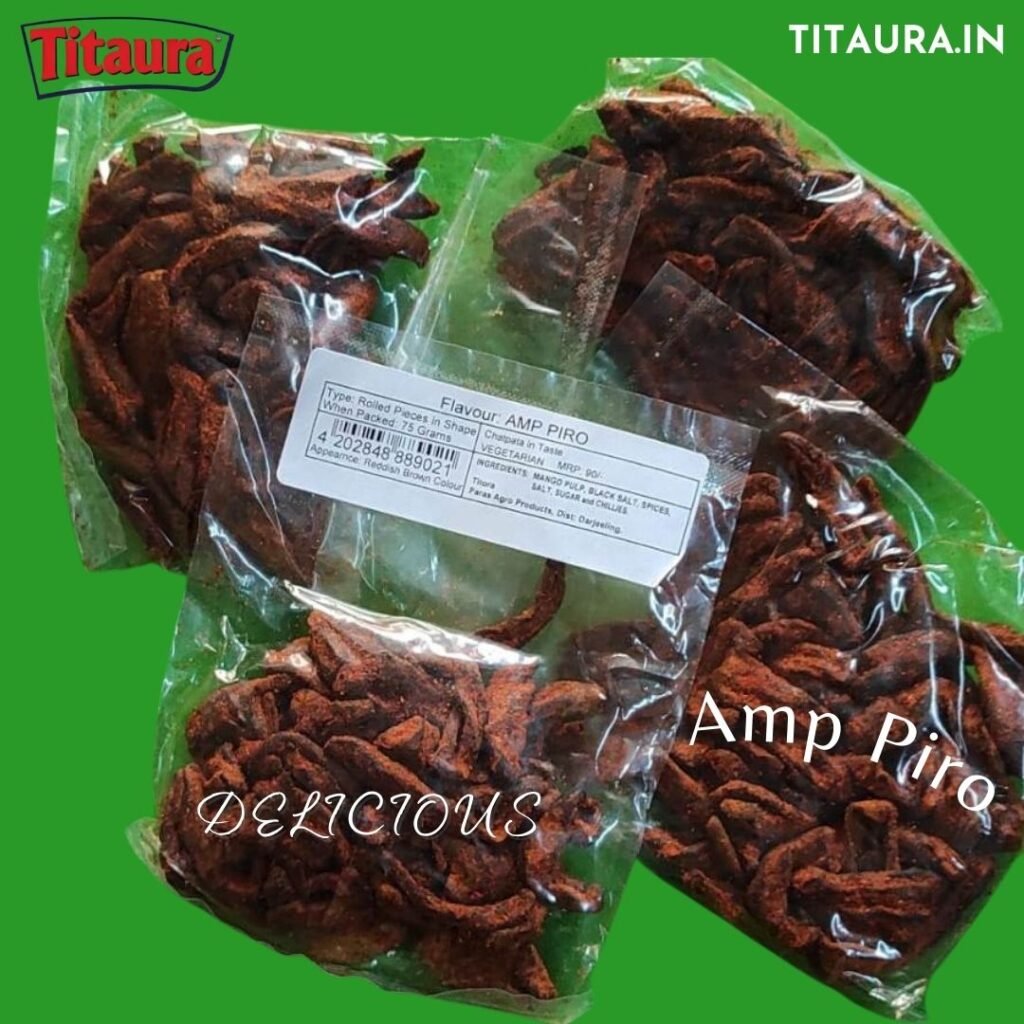
Flavor Profile:
- Tangy and Spicy: Titaura is known for its unique blend of sweet, sour, salty, and spicy flavors, creating a “chatpata” (tangy and spicy) taste.
- Chewy and Satisfying: The dried fruits provide a chewy texture, making it a satisfying snack.
Types of Titaura:
- Lapsi Titaura: The most common type, made from Lapsi.
- Tukra Piro Titaura: A chunky, spicy variety.
- Bechi Pata Titaura: A well-known flavour having salty.
- Amala Chatpat Titaura: Made from amla (Indian gooseberry).
Benefits:
- Quick Energy Booster: Titaura can provide a quick source of energy.
- Digestion Aid: The spicy ingredients can help with digestion.
- Rich in Vitamin C: Lapsi and other fruits used in Titaura are rich in vitamin C.
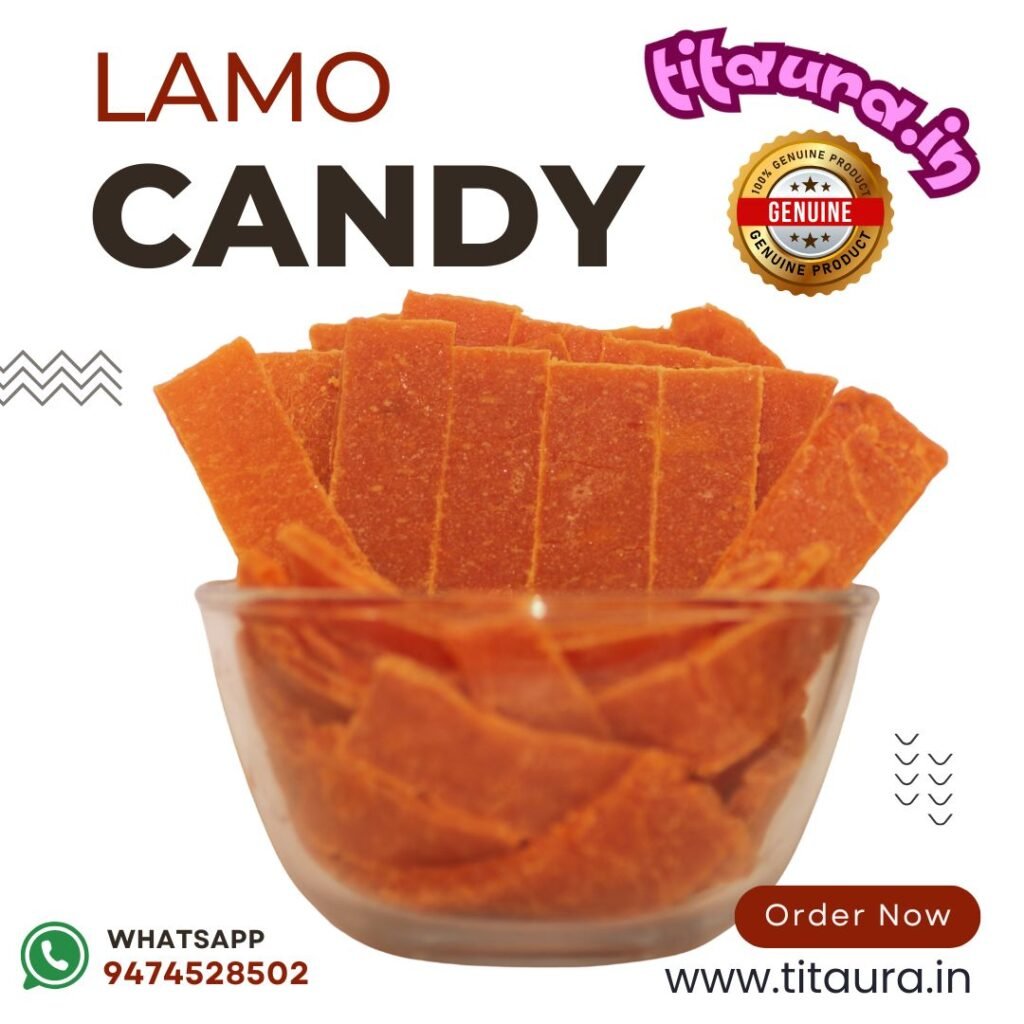
Where to Find It:
- Online: Various online retailers like Titaura.in and Lelow.Online
Nepalese and Himalayan Markets: You can find Titaura in markets and grocery stores in Darjeeling, and other Himalayan regions.
Titaura: The Ancient Tangy-Sweet Candy of the Eastern Himalayan Region
A deep dive into one of India’s most beloved and underrated traditional snacks — its origins, flavors, health benefits, and cultural soul
There are flavors that linger not just on the tongue but in memory — tastes so tied to a place and a people that a single bite can transport you across mountains, years, and generations. Titaura is exactly that kind of food.
If you’ve ever wandered through the vibrant hill-town markets of Darjeeling or Kalimpong in the Eastern Himalayan Region of India, you’ve almost certainly spotted it: small packets of dark, chewy, wrinkled pieces of what looks like dried fruit, dusted with spices, stacked in rows by roadside vendors. You may have been curious. You may have been skeptical. But once you’ve tasted Titaura, there’s rarely any going back.
This article is for the uninitiated — and for those who grew up on Titaura and want to share its story with the world.
What Exactly Is Titaura?
Titaura is a beloved traditional snack of the Himalayan region, made from dried fruits like lapsi, mango, or tamarind, and is known for its unique blend of tangy, sweet, sour, and spicy flavors. At its heart, it is a fruit-based candy — but calling it merely a “candy” undersells its complexity. Titaura is closer to a flavor experience: one that shifts and evolves with each chew, moving from sweet to sour to spicy in a matter of seconds.
Titaura is crafted using dried fruits, especially plum (lapsi), mixed with spices and sugar to create an irresistible chewable delight. The result is a snack that is simultaneously nostalgic and exciting — a perfect balance that has kept generations coming back.
The Star Ingredient: Lapsi, the Himalayan Hog Plum
To understand Titaura, you must first understand Lapsi (Choerospondias axillaris), the small, green, intensely sour fruit that is its soul.
Lapsi is a small, green, and sour fruit native to Darjeeling, primarily found in the hilly regions. Known for its tart flavor, Lapsi becomes the base for various culinary products, including pickles, jams, and most notably, Titaura.
The fruit is naturally rich in Vitamin C, and when prepared as Titaura, it is mixed with spices, resulting in a sweet, sour, tangy, and spicy treat that’s absolutely addictive.
Lapsi has been part of Himalayan culinary culture for centuries. Lapsi fruit is native to the mid-hills of Darjeeling and has been a part of culinary culture for centuries. Traditionally, Lapsi was used in making achaar (pickle), but the innovation of transforming it into Titaura — a chewy, tangy candy — brought a new dimension to its popularity.
It is a fruit deeply embedded in the identity of the Eastern Himalayan foothills — celebrated not just for taste, but for memory, home, and belonging.
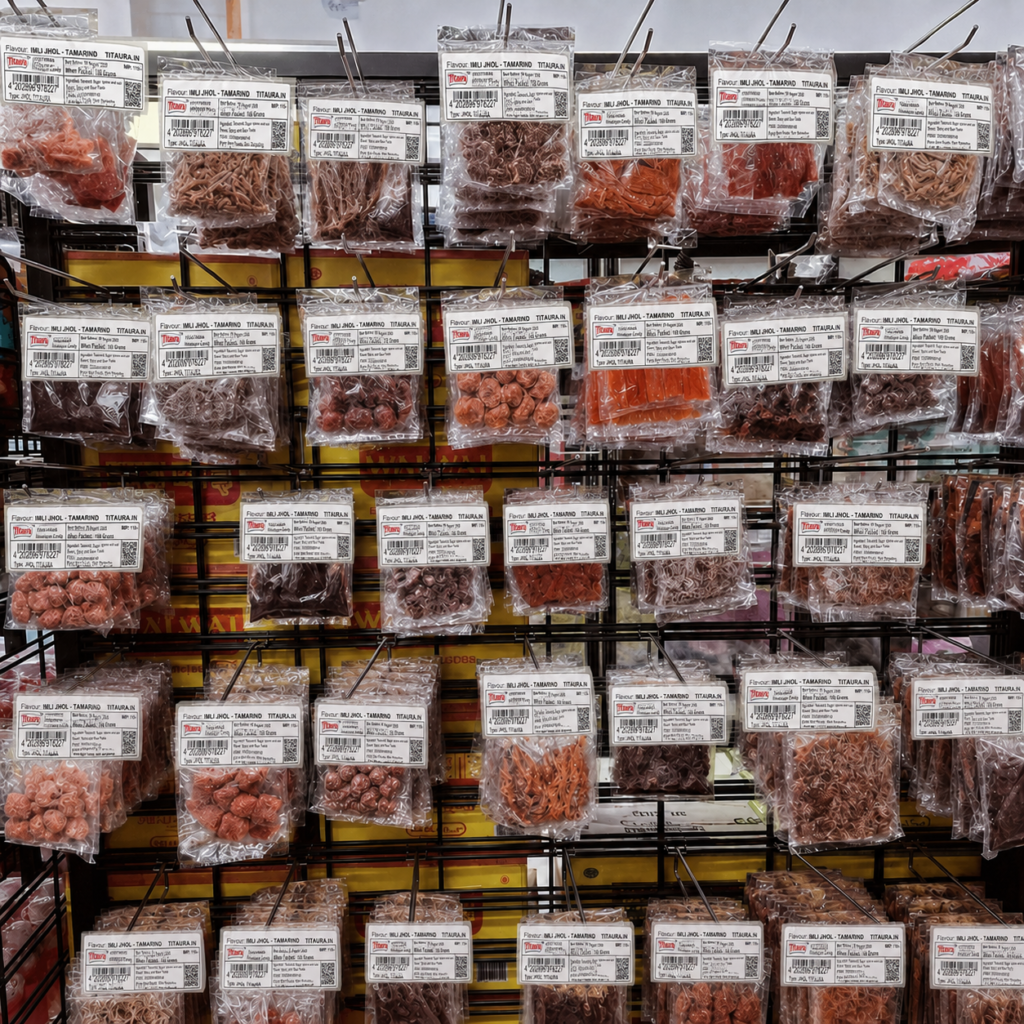
A History Written in Spice and Sun
The story of Titaura is, at its core, a story of preservation and ingenuity.
The tradition of making Titaura dates back several generations in Darjeeling. It was initially a way to preserve Lapsi fruit for off-season consumption. Over time, this preservation method evolved into a popular confectionery item, cherished by locals and visitors alike.
The history of Titaura traces back to the traditional food practices of the hilly region, where preserving fruits using salt, spices, and sun-drying techniques was common. Lapsi, a fruit native to the Eastern Himalayan region, became the hero ingredient for making Titaura due to its natural tartness.
What began as a practical household necessity — a way to extend the harvest season — gradually became a cultural institution. Vendors began selling it in school canteens and roadside stalls. Families passed down recipes. Children grew up with its tang on their lips. And eventually, Titaura became not just a snack, but a symbol.
How Titaura Is Made: From Orchard to Packet
The making of Titaura is a patient, hands-on process that balances tradition with craft.
The process of making Lapsi Titaura involves several steps: Fresh Lapsi fruits are harvested and thoroughly cleaned. The fruits are boiled until soft to separate the pulp from the seeds. The pulp is mixed with spices like salt, chili powder, and sugar to enhance its flavor. The mixture is then spread on trays and sun-dried or oven-dried until it achieves a chewy texture.
The drying stage is critical — it determines the final texture, whether soft and pliable or firm and chewy. Traditional sun-drying imparts a depth of flavor that modern oven-drying can rarely replicate. The slow exposure to mountain air and sunlight concentrates the fruit’s natural acids and sugars, while the spices meld into something greater than the sum of their parts.
A mix of chili powder, cumin, coriander, and salt gives Titaura its spicy kick. Some variations include sugar or jaggery to balance the sourness. Herbs like mint or cilantro are sometimes added for a refreshing touch.
The final product — chewy, spiced, and deeply tangy — is then cut, shaped, or rolled, and packed for sharing.
The Many Faces of Titaura: A World of Varieties
One of Titaura’s great joys is its variety. There is truly a version for every palate.
Based on the main fruit and flavor variations, some common types include: Lapsi Titaura — made from dried lapsi, often sweet, sour, and spicy, coming in forms like Lapsi Dallo (balls) or pressed sheets; Mango Titaura (Aamp Piro) — made from dried mangoes with a blend of sweet, spicy, and tangy flavors; Imli Titaura — tamarind-based, known for its prominent sourness combined with sweetness and spice; Amala Titaura — made from Indian gooseberry, appreciated for its health benefits and unique taste; and Chatpat Masala Titaura — a particularly spicy and tangy mix, sometimes made with a combination of fruits.
Among the most popular varieties found in the Eastern Himalayan region are:
Charpate Titaura — A popular Himalayan snack whose flavor profile is a perfect balance of tangy, sweet, salty, and spicy notes that create an explosion of taste in every bite. The word “Charpate” refers to the thin, irregular strips in which the snack is often shaped, giving it a distinctive texture and appearance.
Piro Patta Titaura — A traditional snack made from dried fruits mixed with a blend of spices, salt, and chili. The name gives away its flavor profile: “Piro” means spicy, “Patta” refers to the dried fruit, and “Titaura” is the term for this type of tangy, chewy snack.
Amala Chatpat Titaura — A popular variant made with amla, which is rich in Vitamin C and antioxidants, giving it a slightly different nutritional and flavor profile compared to Lapsi-based versions.
Bechi Tukra Titaura — A traditional hilly confectionery made from lapsi that comes in small, bite-sized pieces, often coated with spices, sugar, or salt, creating an explosion of flavors.
Each variety carries its own personality, its own texture, its own memory.
The Health Side of This Ancient Snack
Beyond its irresistible flavor, Titaura carries genuine nutritional value — a fact that surprises many first-time enthusiasts.
Lapsi is rich in Vitamin C, which boosts immunity and promotes healthy skin. Its fiber content helps in maintaining gut health. It possesses antioxidant properties that fight free radicals and promote overall well-being. Natural sugars in Lapsi provide a quick energy source.
Titaura is rich in Vitamin C, which helps boost immunity and fight common colds. The combination of spices and natural fruit acids aids in digestion. Lapsi contains antioxidants that help reduce oxidative stress.
The spices used, like cumin and coriander, are known to aid digestion. Compared to other snacks, Titaura is relatively low in calories, making it a guilt-free treat.
Titaura is typically vegan-friendly as it is made from fruits, spices, and natural ingredients without any animal products. It is naturally gluten-free as it is made from fruits and spices without any gluten-containing ingredients.
Of course, moderation is key — Titaura can be a healthy snack in moderation, as it is made from natural fruits and spices. However, it may contain added sugar and salt, so it is best to consume it in limited quantities.
For those looking for a snack that satisfies both craving and conscience, Titaura ticks more boxes than most.
Titaura and Culture: More Than Just a Snack
Food is never just food. In the Eastern Himalayan region, Titaura is a social and cultural touchstone.
Titaura holds a special place in the culture, often enjoyed as a quick energy booster, a digestive aid, or simply as a flavorful treat.
In Himalayan households, Lapsi candies are often shared during festivals and family gatherings, symbolizing the bond of togetherness and the joy of sharing.
Titaura is commonly enjoyed as a snack during long journeys, festivals, or simply as a treat after meals.
For children who grew up in Darjeeling, Siliguri, or the surrounding hills, Titaura is a deeply visceral memory — the ten-rupee packet from the school canteen, the grandmother’s homemade batch drying in the sun, the irresistible smell wafting through a local market. For adults who have moved away, it is one of the most powerful conduits to home.
It is also, interestingly, a beloved comfort for expectant mothers. Titaura is not just a candy — it’s a Himalayan heritage, a symbol of simple happiness, and a comforting treat for pregnant women experiencing cravings. Its tangy, spicy, and sweet balance makes it a perfect pick-me-up during pregnancy — satisfying the taste buds, refreshing the mood, and connecting one with tradition.
From Hills to the World: Titaura Goes Global
What was once a hyper-local treat enjoyed only in the Eastern Himalayan foothills is increasingly finding its way onto global palates.
The mission of Titaura.in is to share the authentic taste, cultural heritage, and vibrant, tangy-spicy flavors of traditional Himalayan Titaura from the Darjeeling region with the entire world. They aim to preserve this local culinary tradition while offering a variety of flavors to snack enthusiasts globally.
Online platforms have played a major role in this expansion. Diaspora communities from the Eastern Himalayan region living across India, the UK, the US, and beyond now have access to authentic Titaura delivered to their doors. And increasingly, adventurous food lovers outside the community are discovering what locals have always known: that few snacks in the world pack as much complex, joyful flavor into such a small package.
How to Enjoy Titaura (For First-Timers)
If you’re new to Titaura, here’s a gentle guide:
- Start mild. Begin with a sweet Lapsi variety rather than a fiery Piro (spicy) version.
- Chew slowly. The flavors evolve with every second you chew. Rushing it means missing the layers.
- Pair it thoughtfully. Titaura pairs beautifully with a hot cup of Darjeeling tea — the tannins in the tea balance the acidity of the fruit.
- Try different varieties. Lapsi, mango, amla, tamarind — each tells a different story.
Spices used in Titaura include cumin powder, coriander powder, black pepper, hing (asafoetida), ginger powder, and garam masala — a profile that makes it a remarkably sophisticated snack, as complex in its spice architecture as any fine chutney or pickle.
How to Enjoy Titaura (For First-Timers)
If you’re new to Titaura, here’s a gentle guide:
- Start mild. Begin with a sweet Lapsi variety rather than a fiery Piro (spicy) version.
- Chew slowly. The flavors evolve with every second you chew. Rushing it means missing the layers.
- Pair it thoughtfully. Titaura pairs beautifully with a hot cup of Darjeeling tea — the tannins in the tea balance the acidity of the fruit.
- Try different varieties. Lapsi, mango, amla, tamarind — each tells a different story.
Spices used in Titaura include cumin powder, coriander powder, black pepper, hing (asafoetida), ginger powder, and garam masala — a profile that makes it a remarkably sophisticated snack, as complex in its spice architecture as any fine chutney or pickle.
Where to Find Authentic Titaura
If you want to experience the real thing — sourced directly from the Eastern Himalayan foothills — look no further than Titaura.in, a platform dedicated to bringing authentic, traditionally prepared Himalayan Titaura to customers across India and beyond. From classic Lapsi Dallo to fiery Piro Patta, the range available captures the full breadth of this beloved snack’s varieties, prepared with care for the authentic flavors that generations have grown up loving.
The Bigger Picture: Why Traditional Snacks Like Titaura Matter
In a world increasingly dominated by ultra-processed, globally uniform snack foods, Titaura represents something rare and precious: a food with a specific geography, a specific community, and a specific story.
Every packet of Titaura carries within it the knowledge of which mountain orchards produce the best Lapsi, the memory of grandmothers laying out fruit pulp on rooftops to dry in the Himalayan sun, the laughter of schoolchildren arguing over whether the spicy or the sweet variety is superior.
These are stories worth preserving. These are flavors worth seeking.
Conclusion
Titaura is not just a snack. It is a window into the culinary soul of the Eastern Himalayan Region of India — a region whose food culture remains criminally underrepresented in the global food conversation.
It is tangy and sweet and spicy all at once. It is ancient and modern. It is deeply local and, increasingly, gloriously global.
If you haven’t tried it yet, consider this your invitation.
And if you have — you already know exactly what this article is really about.
Explore the full world of authentic Himalayan Titaura at titaura.in/titaura — where tradition meets taste.
Food Culture, Himalayan Food, Traditional Snacks, Indian Cuisine, Darjeeling, Eastern India, Healthy Snacking, Artisan Food, Food History, Lapsi
I want something unique in taste